
Creating a relaxing home office environment is essential for maintaining focus, creativity, and overall well-being while working from home. A well-designed workspace can reduce stress, increase productivity, and make your workday more enjoyable. Here are some practical tips to help you create a calming and comfortable home office.
Choose the Right Location
Pick a Quiet Spot
Finding a quiet location free from distractions is crucial. If possible, select a room or a corner of your home that is away from noisy areas like the kitchen or living room. This separation helps signal your brain that it’s time to work, improving concentration.
Consider Natural Light
Natural light can boost mood and energy levels. Position your desk near a window to take advantage of sunlight. If natural light is limited, invest in soft, warm lighting to mimic daylight. Avoid harsh overhead lighting that can cause eye strain.
Invest in Comfortable Furniture
Ergonomic Chair and Desk
Comfortable furniture is key to preventing physical discomfort during long work hours. Choose an ergonomic chair that supports your back and encourages good posture. Your desk should be the right height to keep your arms at a comfortable angle while typing.
Add Soft Textiles
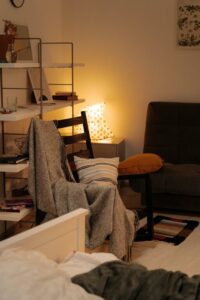
Incorporate cushions or a soft rug to add warmth and comfort to your space. Soft textiles can create a cozy atmosphere that helps you feel more relaxed.
Keep Your Space Organized
Declutter Regularly
A cluttered desk can lead to a cluttered mind. Keep your workspace tidy by regularly organizing papers, supplies, and electronics. Use storage solutions like shelves, drawers, or desk organizers to keep everything in its place.
Use Minimal Decor
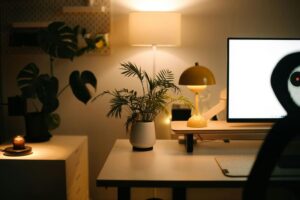
Limit the number of decorative items on your desk to avoid distractions. Choose meaningful or inspirational objects, such as a small plant or a photo, that bring positive energy to your workspace.
Personalize Your Workspace
Add Greenery
Plants are known to reduce stress and improve air quality. Choose low-maintenance plants like succulents or snake plants that thrive indoors. Even a small potted plant can add a refreshing touch to your office.
Use Colors that Calm You
Colors affect mood, so select a color palette that promotes calmness. Blues, greens, and neutrals are often recommended for relaxing environments. You can add these colors through wall paint, artwork, or office accessories.
Incorporate Technology Thoughtfully
Manage Cables and Devices
Tangled cables and multiple devices can clutter your workspace mentally and physically. Use cable organizers and wireless accessories to streamline your desk setup.
Limit Notifications
Constant notifications can interrupt your focus. Turn off non-essential alerts on your devices or use “Do Not Disturb” modes during work hours to maintain concentration.
Create a Routine for Breaks and Movement
Schedule Regular Breaks
Taking short breaks helps reduce eye strain and mental fatigue. Use a timer or app to remind yourself to stand, stretch, or walk around every hour.
Include Relaxing Activities
If space allows, include a comfortable chair or cushion where you can read, meditate, or practice deep breathing exercises for a few minutes during breaks.
Control Noise Levels
Use Noise-Cancelling Solutions
If you cannot find a quiet spot in your home, consider using noise-cancelling headphones or white noise machines to block out distractions.
Play Soothing Sounds
Background music like nature sounds, soft instrumental tunes, or ambient noise can create a peaceful atmosphere conducive to focus and relaxation.
Maintain Good Air Quality
Ventilation is Key
Open windows regularly to allow fresh air circulation. If that’s not possible, use an air purifier to keep the air clean and fresh.
Avoid Strong Scents
Strong perfumes or cleaning chemicals can be distracting or irritating. Opt for mild scents like essential oils or natural air fresheners to create a pleasant environment without overwhelming your senses.
Final Thoughts
Designing a relaxing home office environment takes some thoughtful planning, but the benefits to your mental and physical health are well worth it. By choosing the right location, investing in comfortable furniture, maintaining organization, and incorporating personal touches, you can create a space that feels inviting and helps you work more efficiently. Remember, small changes can make a significant difference, so start with a few tips and adjust your space as you discover what works best for you.
Happy decorating!